PowerVR's own driver as the reference
2026-10-24, late evening.
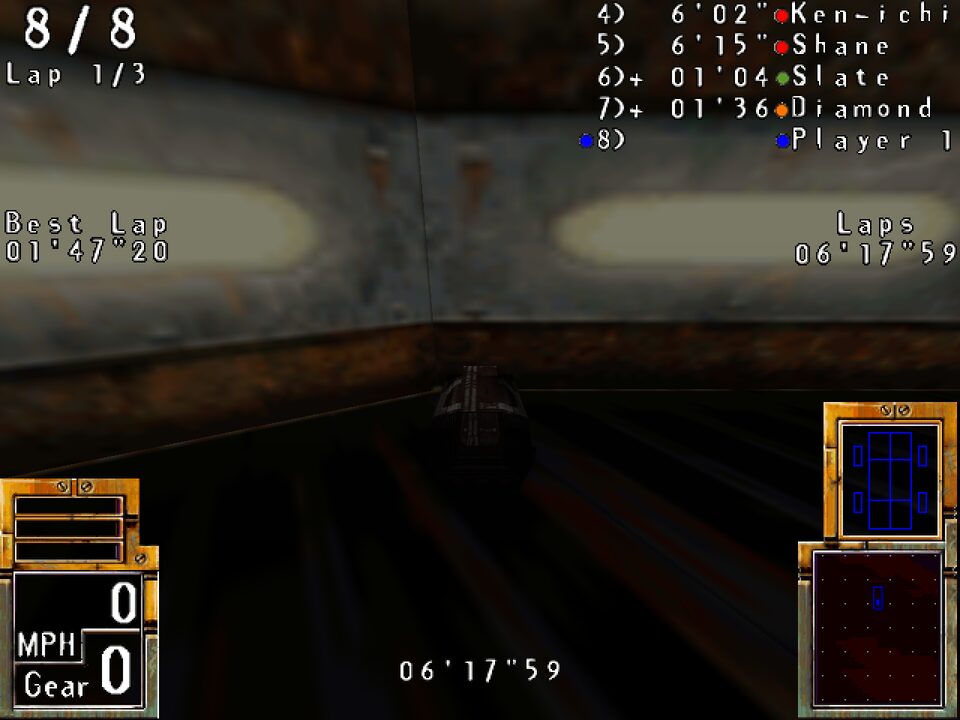
The plan asked for the stand-in's pictures to be checked against what a PowerVR card drew. There is no such card here. But Gold's disc carries more than the SGL headers: the same driver package holds PowerVR's own SGL library, SGLMID4.dll for the PCX2 chip and SGLMID3.dll for the PCX1. That code is what turned the game's calls into the chip's work, so it can answer the questions the headers leave open. We exported SGLMID4.dll with Ghidra and read the parts that matter.
What the driver settled
Fog. sgl_set_fog stores the colour as bytes and turns the density into a rate, -log2(1 - density), split into mantissa and exponent for the chip. When rendering, the driver folds that rate into the chip's depth scale with the camera's foreground distance. A surface therefore keeps 1 - density of its colour for each unit of depth. For POD's densities (0.005 to 0.01) that is within 1% of the guess the stand-in had, and now it is exact.
Shading. The driver's shading routine keeps two colours per vertex: one the texture multiplies, one added after it. Each of the four lighting terms (ambient, diffuse, specular, glow) goes into the first when its texture effect is on, and into the second when it is off. That overturned this afternoon's rule for the sky. POD's sky turns every effect off with a glow of 1, so the hardware drew it white wherever its translucent texture is opaque.
Projection. The driver centres the picture on the camera rectangle and scales by the zoom times half its size. The stand-in's projection was already the same.
Light volumes. sgl_create_light_volume puts the new object into the current list at once. Earlier this evening we placed it where its first plane is added, reasoning from POD's order of calls (the entry before). The driver shows that reasoning was wrong. POD's headlight beam follows its car through the list it sits in, and the transform after it is the identity.
Still open
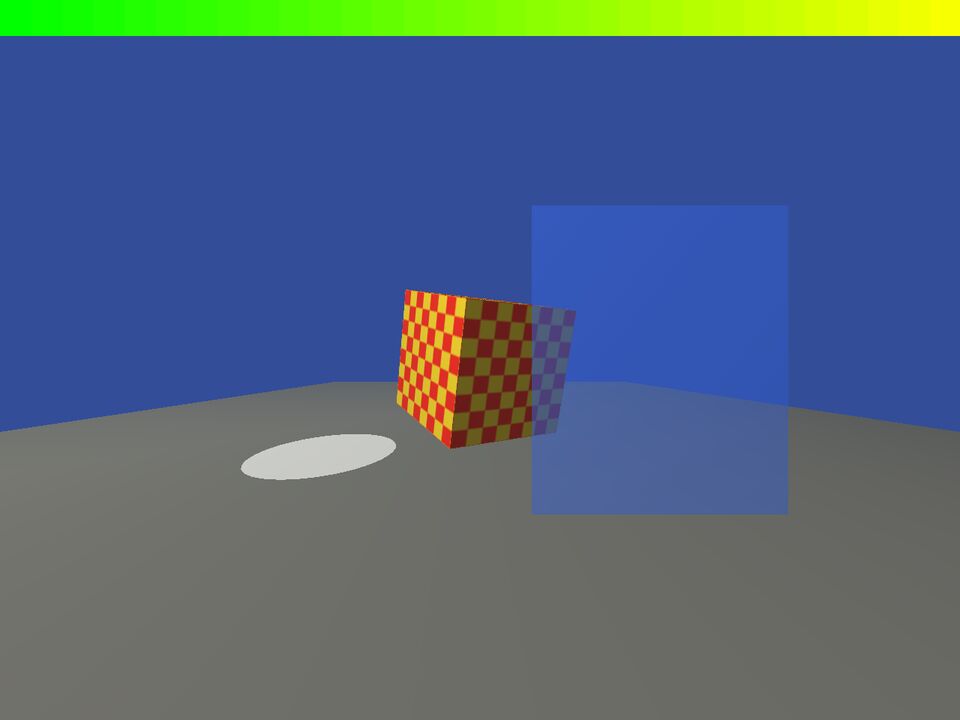
The driver keeps a light's position as a separate list entry, made by sgl_position_light, which POD never calls. Where it puts a light nobody placed is the last guess: the stand-in uses the camera, which POD's car lamps need. How strongly a headlight beam lights the road is the other. Both need the driver's traversal read further, or a picture from a real card.
The race above ran in the emulated PC with the new rules (the run made by the race-loop session). The player's car sits by a wall: at three pictures a second the scripted throttle presses get lost. The cars, walls, dashboard and the darkening of the far hall all draw.